This quarter was a welcome break from the intensity of the past year — for the first time, I wasn’t teaching anything new. This would be my fifth time teaching BIPN 100, and my second time teaching BILD 5. Therefore, I decided to keep BIPN 100 mostly unchanged, focus on making revisions to BILD 5 (documented here), and carve out more time for life outside UCSD. Last quarter, there basically was no free time — every spare moment was spent panic-creating materials for BIPN 103 the night before each class. Although I still had a very positive experience overall, I knew that this pace was unsustainable. As such, my goal this quarter was to give myself more breathing room, and try to reap the rewards from my time I’d invested in developing BIPN 100 and BILD 5 over previous quarters.
Since I did have more free time this quarter, I got to check off a few personal milestones — but before getting to that, I’ll first document some of the edits I made to BIPN 100. First, I made my most drastic content change yet — I cut an entire lecture from the course, specifically the lecture on Renal Clearance. I always felt this lecture stuck out like a sore thumb, for a number of reasons. For one, I knew I was covering this topic in way more detail than the other BIPN 100 instructors. I was initially motivated to teach it based on my own experience taking a medical school Renal Pathophysiology course, where I distinctly remember the concept of clearance making absolutely no sense to me. I therefore thought that by foreshadowing the topic in BIPN 100, my students might be better prepared when it inevitably resurfaced in their postgraduate education.
That said, I never quite figured out how to explain the concept intuitively, and instead spent much of the lecture working through mathematical derivations. (There’s nothing inherently wrong with this of course, but I could always feel my students’ attention drifting as I whipped out yet another equation). I also struggled to write conceptually rich assessment questions about the material, which made it possible for students to eke by with only a half-baked understanding of the topic. In the end, I’m not sure that my students actually got much out of this lecture. But after several quarters of teaching it, what finally made me take the axe to it was hearing students repeatedly tell me that they didn’t have adequate time to study for the Final. That’s partly on me: the fast-paced nature of the quarter system meant that I was always teaching new material up until the last day of class, despite the Final Exam being schedule mere days after. (Unlike schools on a semester system, UCSD does not provide a dedicated week of study between the final lecture and the start of Finals.) Therefore, cutting this lecture allowed me to finish covering all the course content by the penultimate lecture, thus leaving the final lecture for optional review.
Speaking of review, the other major change I made was replacing pre-exam Review Sessions with Study Parties. In the past, my TAs would lead two-hour review sessions before each exam, where they’d present an abbreviated slide deck summarizing the 8-9 lectures on that exam. Although my TAs have always been wonderful and extremely capable at explaining the material, I realized that having a review session was sending the wrong message about how students should be preparing for the exam. Indeed, in the students’ post-exam surveys, I would routinely see students reflect that their poor exam performance was because they “didn’t attend the review session”. It was frustrating to see so many people completely misdiagnosing the problem —missing the review session was not the reason they underperformed, nor would attending have been a magic bullet to improve their grade. Although showing up may have given students a temporary sense of confidence, it’s well-documented that learning comes best from actually doing and not just passively listening (especially when students already have access to all my lecture recordings!)
Therefore, this quarter I started holding ‘Study Parties’ before each exam. I would reserve a large classroom and invite students to bring their own work and study materials, while the TAs and I circulated around the room answering questions as they arose. I really enjoyed the atmosphere — I would see students working through problems together, I enjoyed the camaraderie of our teaching team as we bustled around the room, and I liked being personally involved rather than simply outsourcing the Review Session to a TA. I also think it helped students see me as more accessible, since I was there alongside the entire teaching team. This is definitely something I intend to keep as a regular feature of my future classes.
Finally, beyond these larger structural changes, I made several small polishes to my lecture materials based on common student confusions from last quarter. I really enjoy how, as the quarters go by and I continually hone these lectures, I accumulate lots of tiny updates each time. For example, in my lecture on Renal Reabsorption, I always begin the class by orienting students to this diagram of the nephron, since many textbook figures depicting reabsorption mechanisms use this type of figure. However, last quarter I realised that students were struggling to reconcile this 2D cross sectional view with the 3D tubular structure of the nephron. Their questions revealed that they couldn’t quite visualize what my left-to-right arrow was representing — specifically, what did it mean to be crossing this blue layer?
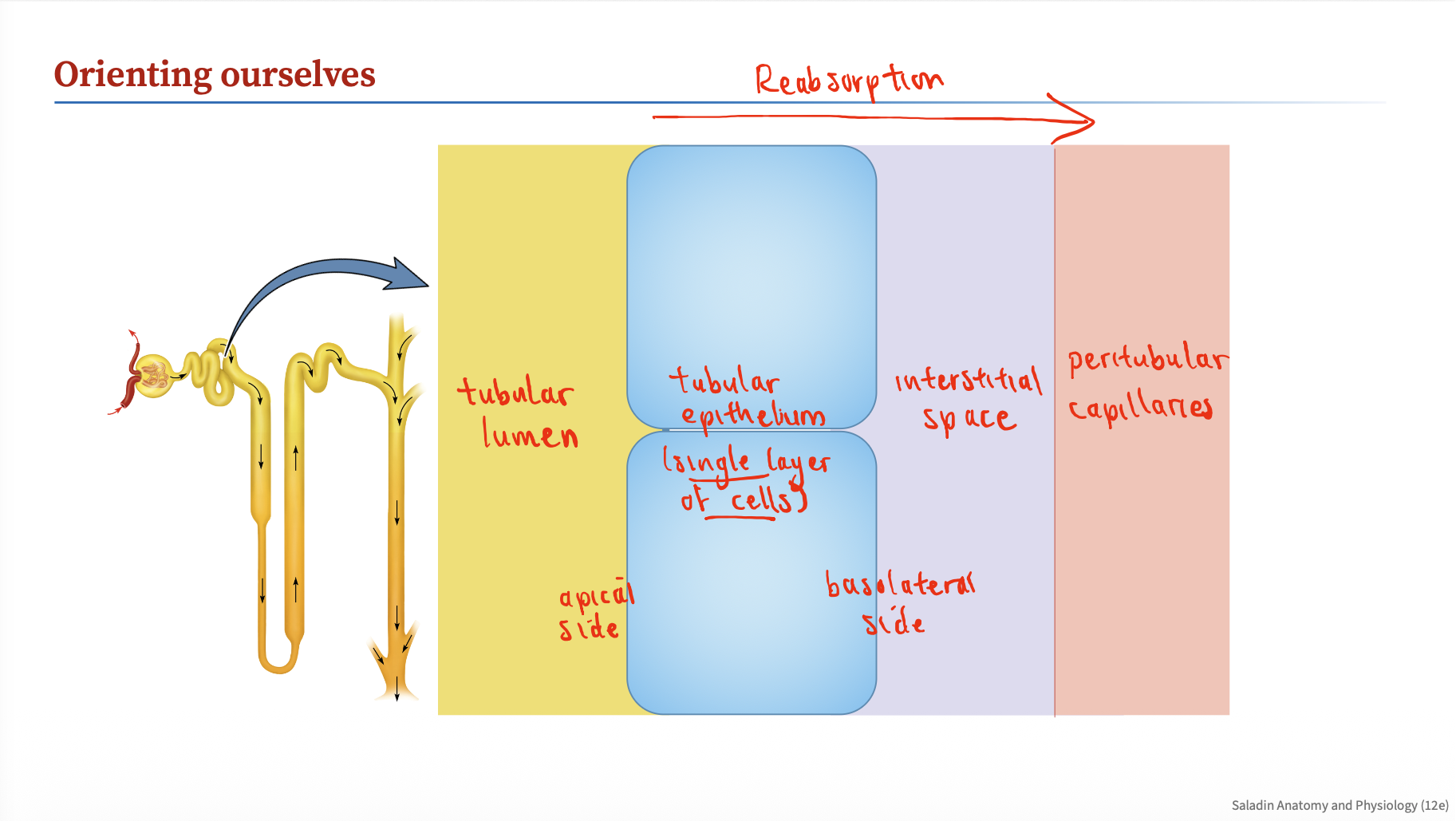
Fig. 1 Slide from last quarter
Therefore, I added a simple cartoon of a tube, colour-coded to match the cross-sectional view, to explicitly show how reabsorbed substances first crossed through the tubular epithelium (wall of the tube) before popping out the other side. It was such a simple fix, but it was gratifying to see how effective such a small change could be. I think this example really highlights the importance of helping students develop their visual literacy for interpreting abstract graphics (in fact, much of my biology education research is centred on how students interpret figures to reason about biology concepts, and how sometimes students don’t see what we ‘want’ them to see).
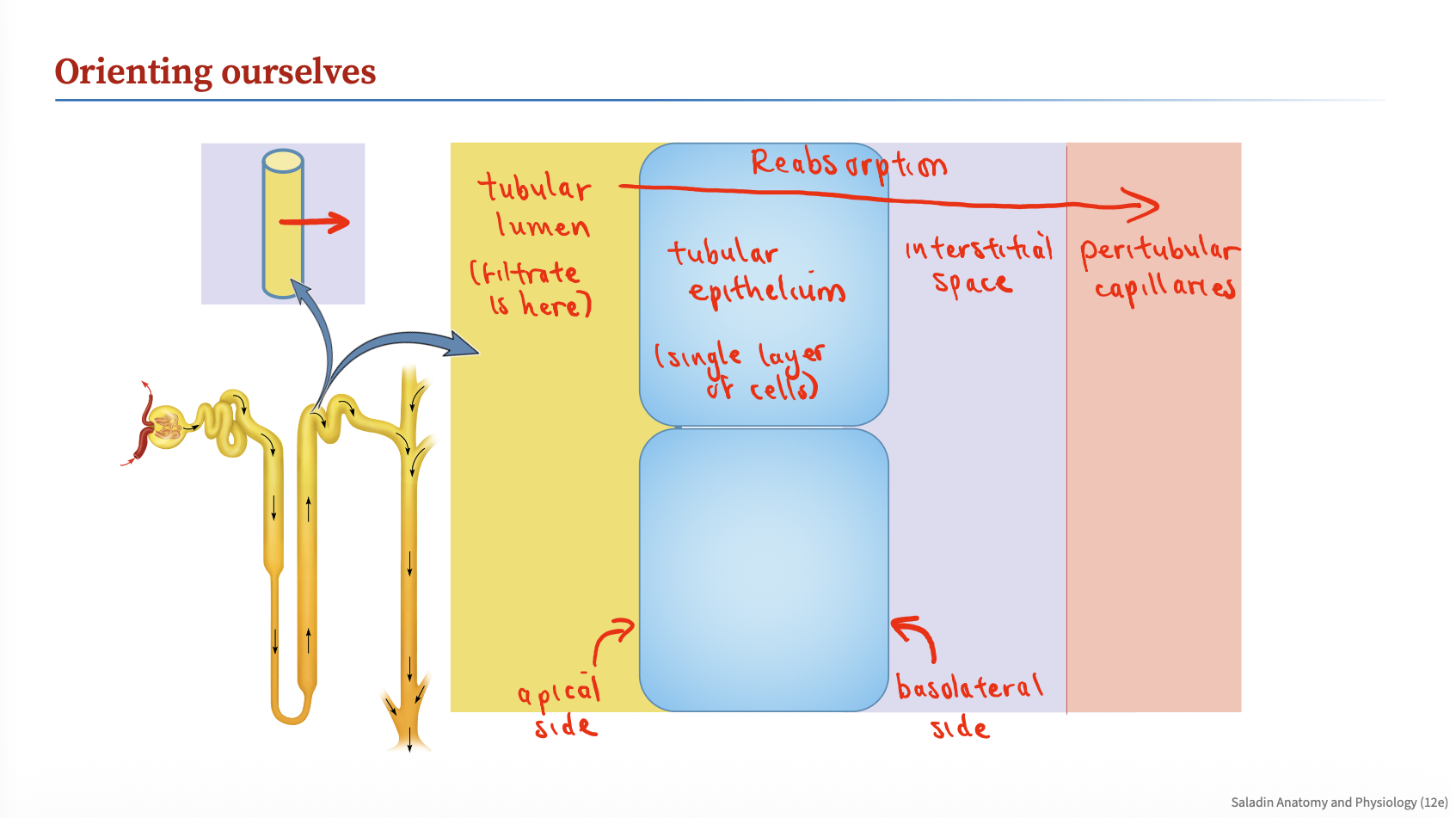
Fig. 2 Slide from this quarter, with added 3D tube
Now onto some personal updates. Since I finally had a more relaxed quarter, I had the opportunity to tick off some personal milestones in my life outside UCSD. Notably, I finally learned how to drive. After 11 years in America, I decided it was finally time to pick up this life skill—one that all of my students had mastered back when they were in high school (at the time of writing, I’m 28 – hello to future Ming rereading this). Each week, I’d get picked up by my driving instructor Jamie (she was awesome!) and we’d bop around the nearby suburbs for two hours. I still vividly remember the first day of class when Jamie rolled in to the parking lot and told me that I’d be driving us to Clairemont. “Already?” I said, assuming we’d at least spend an hour moseying around the carpark before venturing onto the main road. But nope, we went straight onto the actual road and drove away.
Also, my students found great amusement in the fact that their college professor couldn’t drive. For the past few quarters, I would always introduce myself on the first day with a self-deprecating comment that I was looking for a driving teacher, which always drew a few chuckles from the students. This quarter, I would give my students weekly updates about my progress, and it was tremendously endearing how invested they became in my driving journey. The second week of class, I told the students I was about to take my first driving lesson – and they cheered. The week after, I told them I survived my first driving lesson without crashing into anyone/anything – and they cheered. And the final week of class, I told them I was about to take my driving test– and they cheered. I’ll admit that when I was in line at the DMV, I was thinking to myself “why on earth did I tell all of them that I’m taking the exam today? If this goes badly, I’ll have to tell 600 people that I failed tomorrow.” But then I decided that normalising failure was a good thing too, so on I went. I’m happy to say that I passed, and that even now, students I taught several quarters ago still stop me to say hello and enquire about my driving journey.
The second big update is that I moved house! After living in a small downtown loft apartment for the past year and a half, I decided that I wanted to move somewhere quieter and settle there for the longer term. I spent much of the quarter packing up my belongings and moving them across multiple trips with the help of my friends. I absolutely love my new home—it’s in a cute, quiet neighbourhood, I have a little backyard, and I have oodles of space to furnish, decorate, and make my own. I’m grateful that this quarter gave me the time and flexibility to pack up my things and make the move, because I don’t think I would have been able to carve out the time to do any of this during the fall.
All in all, I end this quarter feeling very content. I feel incredibly satisfied that all the work I’ve put into BIPN 100 is paying off. This time last year, I had just finished my very first offering of the class (and my very first quarter as a professor!). That was an incredibly overwhelming quarter, since I was creating all of the course content from scratch and delivering every lecture for the first time. A year later, the course feels much more familiar, and I truly feel like I’m reaping the rewards of the time and effort I invested in building it. I’m looking forward to next quarter, when my schedule will be a carbon copy of this past fall (BIPN 103 in the morning and BIPN 100 in the afternoon). Hopefully, I can continue iterating on BIPN 103 and make its second offering even more awesome than the first.